A play corner in a shared room
A corner of the living room is often the best place for young kids to play, because they want to be near their grown-ups. Mark the corner with a rug, add one low shelf or a row of baskets, and keep the toys in it limited. When the day ends, the toys go back into the baskets and the room is a living room again.
- Pick toy baskets that look good in the room, so you don't need to hide them.
- Choose a rug that can be rolled up or a foam mat that folds away.
- Keep messy play, such as paint, at the kitchen table instead.
A closet playroom
A reach-in closet with the doors removed or left open can become a small play nook. Low shelves on the back wall can hold bins, a cushion on the floor makes a reading spot, and a string of battery lights or a plug-in lamp can add light. Keep the closet lit and well ventilated, and never let a child play in a closet with doors that can latch shut.
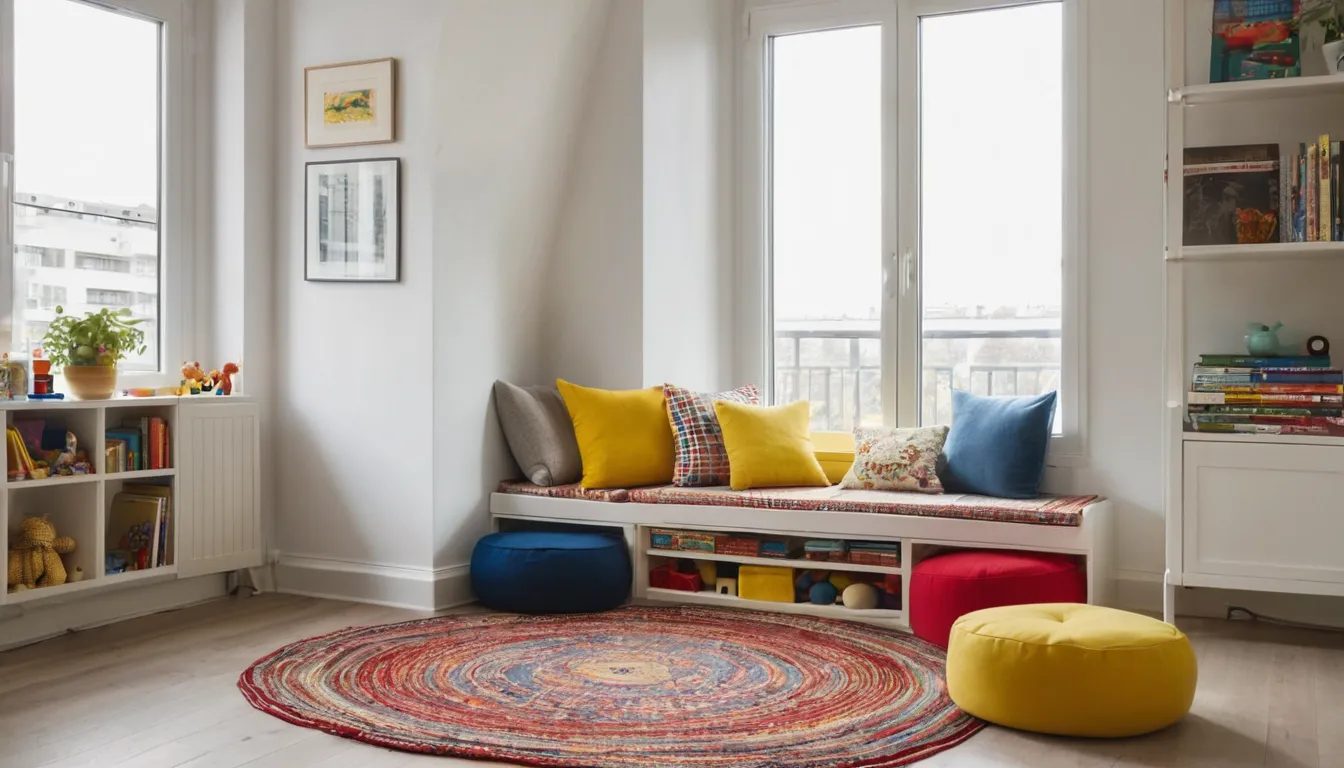
Use the walls
When floor space is tight, wall space helps. Wall-mounted shelves, hanging pockets and pegboards hold toys off the floor. Keep the things kids use daily at their height, and use higher wall space for resting toys or adult-only supplies. Anything mounted on a wall needs to be secured into studs or with the right anchors. The anchoring guide explains wall types.
Under, behind and on top
- Under the bed: shallow rolling bins hold resting toys for rotation.
- Behind doors: an over-door organizer can hold small toys, but choose one with clear pockets and keep heavy items out of it.
- Bench storage: a storage bench can be seating and a toy box at once. Use one with a safe lid support or an open front.
Fewer toys, more space
In a small home, the most useful step is usually to have fewer toys out at once. A rotation plan with four bins and two out at a time can fit on a single shelf. The rest can live in a closet or under a bed.
out on the shelf back from a rest resting in the closet
4 bins, 2 out at a time, 4 weeks shown. Two bins on the shelf, two in storage, one swap a week.
- Week 1: start with Build, Pretend
- Week 2: Move out, Build back in the closet
- Week 3: Quiet out, Pretend back in the closet
- Week 4: Build out, Move back in the closet
Packing play away
A small space works best when it can be reset quickly. A few habits help:
- Keep a large basket or bin as a catch-all for the end of the day.
- Use a play mat or tray for building projects, so a half-built tower can be lifted aside.
- Store each kind of toy in one container, so packing up means filling a few bins.
- Set a short cleanup time every day. The cleanup guide has a routine.
Shared bedrooms
If siblings share a bedroom that doubles as a playroom, give each child a shelf or a bin they own. Keep the sleep area calm, and place play storage on the other side of the room. Small parts belonging to an older child should be stored high or in a lidded box if a toddler shares the room. The layouts by age guide has more on mixed-age rooms.